
THE
MINDFULNESS HABIT
It’s not what YOU think!
Join Joe Hudson Live For This Free 2-Hour Virtual Workshop
COMING SOON - SIGN UP TO BE NOTIFIED!
Monday, Nov 10, 2025
7pm - 9pm ET
4pm - 6pm PT
THE HABITS OF HAPPINESS SERIES: #4
THE MINDFULNESS HABIT
It's not what YOU think!
Join Joe Hudson Live For This Free
2-Hour Virtual Workshop
COMING SOON - SIGN UP TO BE NOTIFIED!
Monday, Nov 10, 2025
7pm - 9pm ET | 4pm - 6pm PT

THE HABITS OF HAPPINESS SERIES:
#4 - The Mindfulness Habit
You’ve been told to be more “mindful” and to practice “mindfulness.”
After all, scientific studies have shown us the mental health benefits of mindfulness: reducing stress, depression, and anxiety symptoms while enhancing mood, well-being, cognitive function, and emotional regulation.
And the physical health benefits: reducing blood pressure and chronic pain while enhancing sleep quality, gut health, and immune function.
The instruction to practice implies it is something that doesn’t come naturally.
(And, let’s face it, mindfulness comes to us humans about as naturally as the color orange comes to Doritos.)
People might have occasional moments of present-awareness, but it’s usually short lived.
You might even go a step further and have a “meditation practice,” likely done in a secluded, quiet place, where you incorporate mindfulness – non-judgmental awareness and acceptance of whatever arises – into your meditation.
Nothing wrong with that.
You might have noticed, however, when you return to the “real world,” the default, well-practiced habits of distraction and distortion take over…like weeds in a garden.
Why? Because mindfulness is not yet a habit.
Building habits takes a lot of repetition and reinforcement, which, after all, takes time. So, naturally, someone might suggest that you just need to add more time to your current practice.
But time, itself, will not result in the mindfulness habit.
I’m reminded of the wisdom of Coach Porter who, thirty years ago, (rather forcefully) told me, “Joe, practice does NOT make perfect! Practice makes permanent!”
In other words, time is a variable that compounds, for better or worse, whatever you’re doing within that time.
So, what if the answer is NOT to add more time to your existing mindfulness meditation practice, but to change the practice?
The Mindfulness Habit is the next habit in the Habits of Happiness series.
Why mindfulness? What does mindfulness have to do with happiness?
If distractions and distortions are linked to distress and unhappiness (and they are), and if mindfulness can dissolve distractions and distortions (which it can), then mindfulness is essential for happiness.
See, I believe true mindfulness brings awareness of the proximate cause of all thoughts and physical sensations.
(I know…there’s a lot to unpack in that sentence…and that’s what we’ll be doing in the upcoming FREE Mindfulness Habit Workshop.)
I’m not simply talking about an awareness OF the thoughts and physical sensations, themselves.
I’m talking about an awareness of HOW those things occur.
What is their source?
Spoiler alert: It’s not what YOU think…
Take this quiz if you’re curious to know WHO has been doing most of the thinking for YOU!
In the Mindfulness Habit workshop, you will:
- Learn a new way to think about mindfulness – identifying the subconscious source of your thoughts, sensations, and impulses.
- Learn how to develop a mindfulness practice that is worth repeating until it becomes a habit.
To get the most out of the workshop, complete this quiz (click here) and bring the results with you to the workshop.
Bonus: Email the results to info@habitarchitects.com before the workshop, and you may be selected to work with me (Joe) one-on-one, to dive deeper into your results of the quiz, during the workshop.
So, if you want to learn a new way to think about mindfulness, and turn it into a habit, instead of a once-a-day meditation, register now.
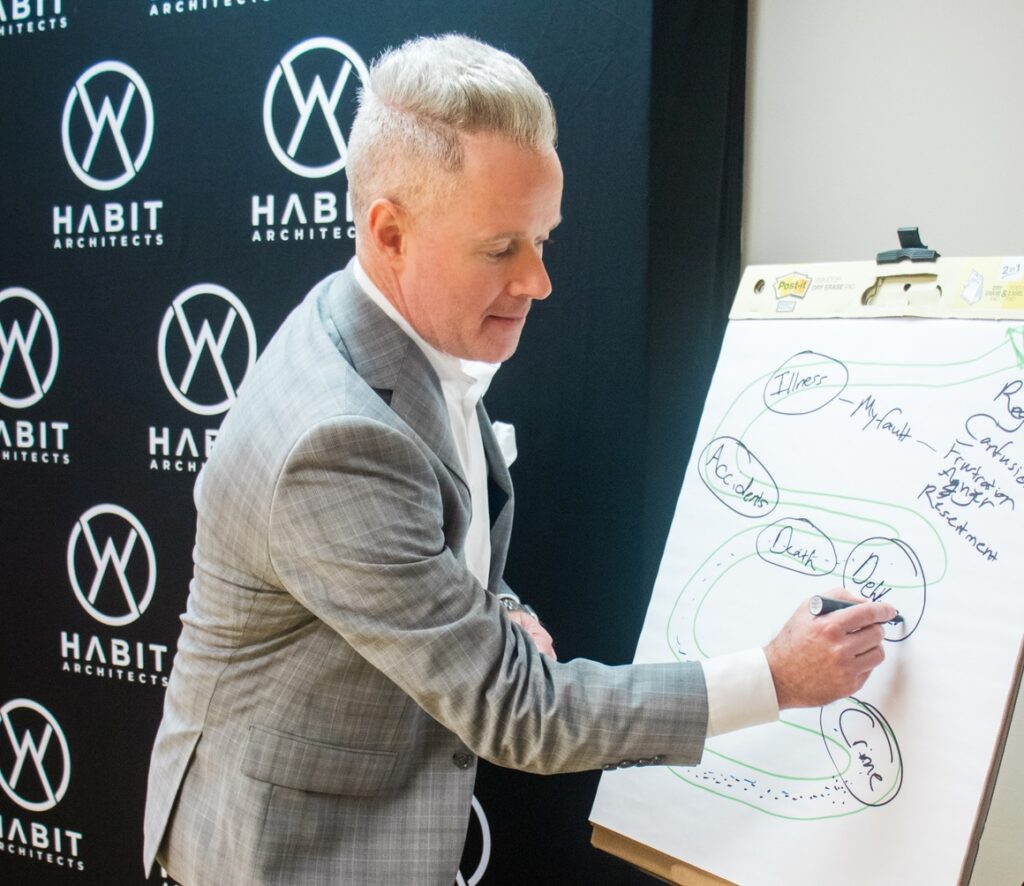
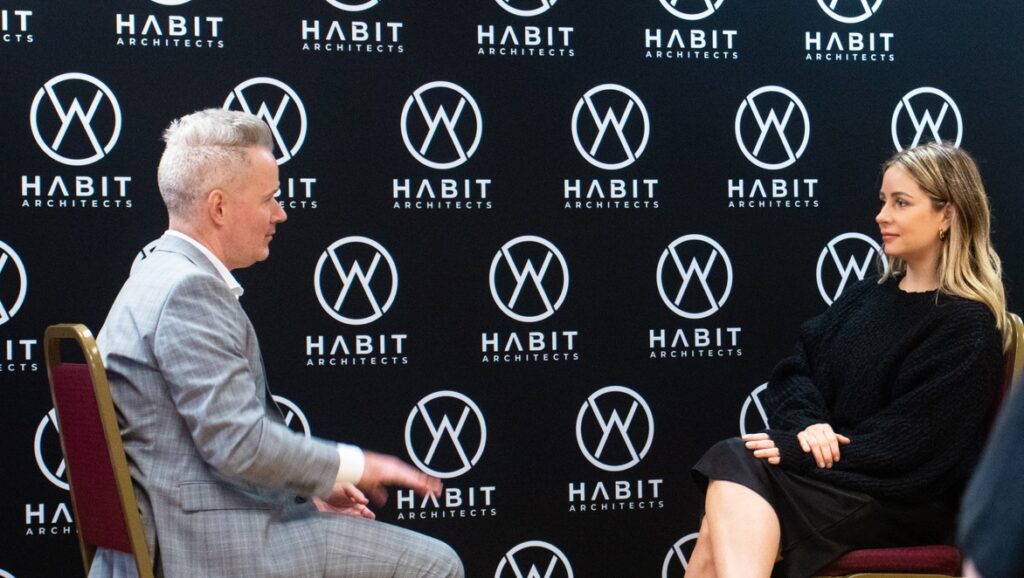

Through LIVE discussion and demonstration with REAL participants, get everything you need to...
01
THINK Purposefully
Learn to identify the source of your thoughts, sensations, and impulses.
02
FEEL Peacefully
Let go of the distortions that cloud and complicate life, and experience peace that comes through simplicity.
03
ACT Powerfully
Learn to quiet the noise of your inner naysayers so you can receive direction from you inner wisdom, then act on it.
Success Stories
“The process of finding the “kinks” in the subconscious mind and learning I can attach a different feeling to them was so powerful.”
Michaela H.
Rated 5 out of 5
"Joe's engaging and intuitive way of explaining the content was really helpful. Watching the method in action with a volunteer was impactful for me. I spent the rest of the weekend talking about my experience."
Christina M.
Rated 5 out of 5
“I left feeling confident in myself.”
Irene D.
Rated 5 out of 5
Your subconscious mind is your best friend. Are you speaking the same language?
Joe Hudson
Licensed Clinical Social Worker (LCSW), psychotherapist, coach, and the founder of Habit Architects.
It’s Time To Think, Feel, and Act with purpose, peace, and power!
I started Habit Architects because my experience as a therapist and coach continued to show me that most people consciously KNOW what they want to be BEING, DOING, and HAVING, yet something seems to be holding them back.
I came to believe that SUBCONSCIOUS beliefs were that thing holding everyone back!
Therefore, I believe the key to changing what you want to change is causing that change at the level of your subconscious mind.
In the workshop, you’ll be surrounded by a diverse community that will inspire and support you.
This isn’t just an event. It’s an opportunity to FREE yourself from the past so that you have POWER in the present.
The time to do that is NOW.